Showing posts with label pickeling. Show all posts

Tuesday, August 8, 2017

Making Pickled Grapes

I know, why would you want to pickle grapes after all? And what the heck do they taste like?  But trust me these are worth it. They make a wonderful condiment for chicken or turkey, and are a very special gift for that food gourmet in your life. 

I got the recipe from that pickling Bible 

The Joy Of Pickling 


which I think any serious or even pottering home cook should own.  She has such an abundance of recipes from fermented pickles, Asian pickles and fruit pickles that you can really find a recipe for anything you have too much of at the moment!  And as with most cookbooks that I actually deem worthy of purchasing (I am so pathetically cheap) it is a highly entertaining book with tons of history of the different types of pickles and how they came to be in different cultures.  

Well on to how I first tried pickling grapes.  I actually received a box of beautiful green interlaken grapes from a friend and had way to much to use before they went off, but certainly not enough to make jelly.  Interlaken are small green seedless grapes that are similar I suppose to champagne grapes in looks but not flavor of course.  Well now I was in a conundrum!  I hate to waste any food but had no way to use them up and I remember reading in the above book about pickled grapes.  What the heck I thought!  If we don't like them we can throw them to the chickens!  Rather than cutting the grapes in half I pickled them whole as they were so tiny and the results were just delicious.  They aren't vinegary or salty at all but more like whole cranberry sauce only grape flavored.  My very picky family just loved it and we ate them with roasted chicken and it was at the table for Thanksgiving.  This also is a wonderfully easy recipe which also earns brownie points for me.  So this year with grapes on a great sale I bought a bunch just for making into pickles.  I used her dark grape recipe and these are called midnight beauties and are seedless eating grapes.  But I will say that I liked the results from the smaller whole grapes much better.  You can often find interlaken grapes at farmers markets, or use some other seedless small grape.

WASHING AND STEMMING THE GRAPES


THE HALVED GRAPES AND PICKLING SOLUTION HEATING UP


THE FINISHED PRODUCT WHICH WILL BE READY IN TWO WEEKS 


This post contains affiliate links that help support this blog!  Thank You!

Tuesday, July 7, 2015

Pickle Making and Home Fermentation Made Easy!

Canning day! I'm a history buff when it comes to how people actually lived and what they did to survive. When you look at the history of food preservation before canning jars came to be it was five things they did to prolong the foods life. This is not counting root cellaring.

"Of course I can!"Salting- which gave you good outcomes but made the meat very very salty. However since people back then ate very little meat the extra salt was probably appreciated.
Drying- no comment necessary

1950's housewife.....still using skill learned on the farm.....everyone was into canning food.Larding- things like mince pies or cooked meat was layered between melted fat and put in crocks in a very cold secure room. This was done in the late fall of course.

When we had so many chores, we didn't have time to worry about...all the crap we worry about now!Sugaring- preserve fruits in very high (like inedible) concentrations of sugar. The foods has to be soaked in water before eating. But this was only used infrequently because truly poor people had very little money to use sugar this way.

Fermented pickling- this was very common and used on meats, veggies and fruits.

Olde America Antiques | Quilt Blocks | National Parks | Bozeman Montana : Agriculture and Farming - Woman Canning 2I love fermenting my pickles and veggies. It doesn't require heat treating or self sealing lids. I have made both fermented pickles and regular pickles. I like fermented pickles for dills and mixed veggie pickles. They are always crisp tangy and have a zing that is almost like carbonation that other pickles don't. Also there is a lot of info out there pointing to lactos fermented pickles being very good for your health. I only do Bread and Butter cucumber pickles the standard way. The recipe I use for that is from my favorite book The Joy of Pickling.

Vintage canning graphic.  Mom canned a lot of the things we ate.Fermenting is also easy, much easier than making standard pickles. All you do is mix the brine, throw in the spices and veggies, cover with brine, and bam! Your done. The fermenting takes place in a moderately warm room or shelf. You check them ever so often to make sure the brine is covering the veggies and to make sure that the fermentation is doing it's thing. That's it! After two weeks you have really amazing food. Keep it in a cool place and they last up to a year like the fridge. Mine are gone way before that though! You can use used canning jar lids and quart jars for this. Or you can get old fashioned pickle crocks. You could also use non reactive tubs.

13 great posters on preserving food, when it was life or deathAnyone here who has put up lots of food for home use will know that the summer is frenetic in its pace. You are constantly planting, harvesting, canning, and preserving all the food to get you through to the next year from dawn till dusk. So anything that cuts down on processing time is a blessing, especially if you are using a wood cook stove to process jars in a hot kitchen .

Just to give you a clue on how much food you'll need to be canning for fall/winter/spring use I tell you mine. I have a family of 6. To get us through from fall to late spring I have to can:

Some Basics of Home Canning (recipes and how to use home canned items also)30 quarts applesauce
30 quarts cherries
30 quarts pears
30 quarts peaches
20 quarts assorted pickles
20 pints of assorted fruit pickles
15 pints each of strawberry, cherry, peach, and apricot jams at least
45 quarts marinara sauce
30 quarts tomatoes
30 pints of misc. condiments like apple chutney, salsa, and ketchup.

vintage housewifeI don't can green beans because it freaks me out with the low acid so I freeze tons and tons of them for dinners.

I also freeze a mix of summer squash/onion/eggplant for casseroles, soups, stir fry, and oven roasting in the winter.

There is so much more I do or want to do but these are just the main things I shoot for. We also root cellar a lot of winter squash, potatoes, apples, and onions. You can see how busy you'll be just doing preservation if you really had to grow all your own food. And I don't even reach that goal. I'm going to try doing sauerkraut this year too. It's supposed to be much better than the store stuff and you can ferment it in quart jars.

Two great books on easy fermenting foods are:


The Joy of Pickling- has a huge section on fermented pickles. The other sections are great too, I tried making pickled grapes last year with a recipe from this book and even my very picky extended family loved them at Thanksgiving. They were more like a condiment you would serve with meat. Like cranberry sauce.

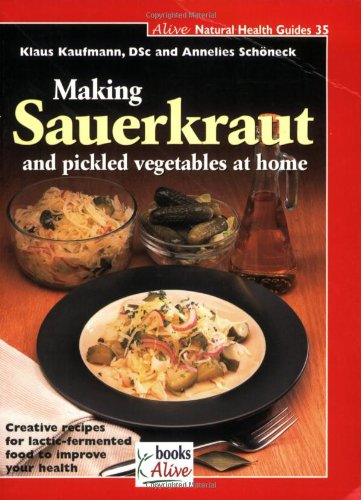
Making Sauerkraut and Pickled Vegetables At Home- Klaus Kaufmann and Annelies Schoneck- This is where I first learned to make fermented pickles. It explains how Lactic acid fermentation works to preserve the food safely and a step by step look at the process which The Joy of Pickling does not. The Joy of Pickling has many more recipes for flavors of fermented pickles. They sell this book in health food stores.